A shop front in Valentines Park has to satisfy the planning officer, stand up to wind and driving rain, keep intruders out and keep heating costs down, all while showing off what you sell. We design, supply and fit shop front glazing in laminated, toughened or insulated units with low-E or solar-control coatings, set in aluminium, steel or timber frames chosen to suit the street. Etched branding, LED lightboxes and EN 356 rated security glass can be built in from the start. The sections below explain the choices and how to get them right.
Key insights
- Shop front glazing in Valentines Park must clear planning policy on frontages, conservation-area guidance and the Building Regulations before anything is ordered.
- Laminated glass with a security interlayer, toughened glass and insulated units each do a different job: attack resistance, impact safety and thermal performance.
- Aluminium is the all-round choice, steel spans furthest with the thinnest profiles, and timber wins approval on heritage parades.
- Etched logos, printed interlayers, tinted films and integrated LED signage turn the glass into part of the brand without breaking compliance rules.
- A full service runs from survey and structural checks through installation and weatherproofing to a maintenance and replacement plan.
Why Shop Front Glazing Matters in Valentines Park
A shop on the high street and a trade counter on an industrial estate have one thing in common: the frontage is the first contact a customer has with the business. Shop front glazing in Valentines Park is the interface between your brand and the pavement, and the glass has to perform as a thermal, security and display element at the same time.
In a tightly packed, mixed-use district the right glass brings in daylight, cuts glare and keeps the shop at a steady temperature, which reduces heating and cooling bills and makes staff more comfortable. It also deters the opportunist thief. A laminated unit in a properly anchored frame resists a kick or a thrown object without the shop looking like a fortress.
Quality shows. A clear, well-detailed frontage makes an interior feel open and safe and raises how customers rate the business before they walk in. Look after the glazing with a simple maintenance schedule and the frontage keeps that effect for years, with fewer emergency call-outs and no unplanned downtime.
What Shop Front Glazing Involves: Glass Types and Systems
Beyond a simple pane in a frame, a shop front is a coordinated set of glass, framing and hardware built to meet performance, branding and compliance targets. The core decisions are between laminated safety glass, which holds together when broken and can carry a security interlayer; toughened glass, which resists impact and breaks safely; and insulated glass units, which deliver the U-value and acoustic performance.
Coatings and interlayers come next. Low-E coatings keep heat in, solar-control coatings keep summer sun out, and fritted or digitally printed glass carries your identity while managing glare. Newer options such as switchable privacy glass, bird-safe patterns and glass with LEDs sealed inside let a Valentines Park frontage stand out and stay useful for years. The door system, threshold and ironmongery are then specified so that access, durability and compliance all line up.
Aluminium vs Steel vs Timber Shop Front Frames
The frame decides how the shop front copes with wind loads, weather, attempted break-ins and the look your brand needs. Aluminium gives slim sightlines, a tough powder-coated finish and easy routes for lighting cables through mullions and transoms. Steel carries the greatest load with the thinnest sections, which suits wide spans and minimalist retail. Timber satisfies conservation guidance and period styling while hiding modern thermal breaks and glazing inside.
The usual comparison runs:
- Aluminium: the best balance of cost, weight and flexibility for most units.
- Steel: the longest spans and the strongest architectural statement.
- Timber: heritage character and warmth that planners favour on older parades.
- Hybrid: aluminium outside for weathering, timber inside for a premium feel.
Security Features for Valentines Park Shop Front Glazing
Retailers in Valentines Park trade in a busy, sometimes higher-risk setting, so the glass has to work as a security barrier as well as a window. The usual answer is laminated glass with an interlayer tested for resistance to manual attack under EN 356, which keeps the pane in one piece and the intruder outside while the alarm does its job.
The glass is only as good as its fixing. We use toughened-laminated units in aluminium or steel frames with continuous glazing channels and security-rated anchors, add locking bead profiles so the glass cannot be levered out from outside, and reinforce the stall riser against ram-raid attempts where the street layout allows a vehicle to get close.
Tints and decorative films add a further layer. They screen high-value stock from the pavement after dark, hide internal grilles or security blinds, and keep the façade looking clean and modern rather than defensive.
Insulation, Noise and Natural Light in Shop Fronts
Security is only part of the specification for a Valentines Park shop front; the glass also has to limit heat loss, hold back street noise and let in enough daylight to show the stock. Getting the balance right keeps the shop comfortable, cheaper to run and clear to see into from the pavement.
A modern insulated unit with a low-E coating, warm-edge spacer and argon fill lowers the U-value and evens out the temperature inside. Adding an acoustic laminated pane knocks back traffic noise without any loss of clarity. Where the frontage faces south or west, a selective coating or solar film keeps glare and overheating under control.
The main levers are:
- Pane thicknesses and the depth of the cavity
- The acoustic interlayer and the laminating sequence
- Spectrally selective solar-control coatings or films
- Frame thermal breaks, gaskets and an airtight installation
Shop Front Glazing Design Ideas to Showcase Your Brand
The glass itself can carry the brand. Etched logos, fritted patterns and colour-matched films fix your identity into the façade, and when they are combined with properly engineered illuminated signage the shop stays legible in daylight, dusk and darkness while staying within local rules. The next two sections cover glass treatments and lighting on Valentines Park high streets.
Branding Through Glass Design
Handled well, a shop front is a branding surface rather than a transparent wall. Geometry, colour and texture from your identity can be built into the glass, and the same treatments control privacy, solar gain and sightlines, so form and function come from one specification.
Ways to carry branding in the glass include:
- Etched or ceramic-fritted patterns taken from your logo, icons or typeface
- Tints that match brand colours while cutting glare and UV fading of stock
- Laminated interlayers printed with gradients, motifs or textures unique to you
- Manifestation bands designed as brand marks that still meet the visibility rules
Illuminated Displays And Signage
Signage built into the glazing turns the shop front into an advertising surface that works after closing time. LED lightboxes, edge-lit logos and digital panels can sit within or against insulated units without spoiling the thermal performance, provided the detailing is done at design stage.
Use low-energy LEDs with even light control to avoid hotspots and glare for passers-by. Run cables through mullions and transoms so there is no visible wiring and the fittings can be serviced later. For Valentines Park's wet weather, insist on sealed, IP-rated fittings with somewhere for heat to escape.
Match the colour temperature of the signage to the interior lighting and the brand palette, so the shop reads the same at midday and at midnight.
Valentines Park Planning Rules and Building Regs for Shop Fronts
Planning policy in Valentines Park shapes what a new shop front can look like, particularly in conservation areas and on designated primary shopping frontages. The façade is not a blank canvas; the council will expect proportions, transparency and materials that fit the parade, and Building Control will expect a weather-tight, structurally sound envelope that lasts.
The points that usually need resolving are:
- Lining up with the existing streetscape, fascia and cornice lines and stall-riser heights
- Keeping enough clear glass to preserve an active frontage and views into the shop
- Proving the frame and glass can take the local wind loading and rain exposure
- Thermal performance, drainage and junctions detailed to avoid cold bridging and leaks
Safety Glass and Accessibility Standards for Shop Front Glazing
The shop front may be a marketing tool to you, but to Building Control it is a safety-critical element and a means of access first. Every pane in a critical location must be toughened or laminated safety glass with an impact classification to BS EN 12600, as required by Approved Document K.
Part M then covers accessibility: a level or ramped threshold, a door that can be operated with limited strength, and manifestation on any large area of clear glass at two heights so it cannot be walked into. Frosting and contrasting film do this job while also managing solar gain, so they are functional as well as decorative. High-contrast markings help visually impaired customers find the door and avoid the sidelights.
Add protection to low-level glazing, finger-safe door edges and closers set to the correct opening force, and the result is a compliant Valentines Park shop front that will not need reworking when the rules are next tightened.
Shop Front Glazing Costs in Valentines Park: Budget and Price Factors
Pricing a new shop front in Valentines Park means weighing the glass specification, the frame type, the security level and how awkward the site is against the budget you have. The money buys thermal performance, security and brand presence, and the planning constraints on your particular street set the floor on specification.
The price drivers to weigh up:
- Glass type – laminated, toughened, low-iron and solar-control coatings each change cost, clarity and energy performance.
- Frame system – thermally broken aluminium, slim steel or a hybrid system changes the achievable span, the look and the interface details.
- Design extras – bespoke colours, branding films and integrated LED channels add value but raise the rate per square metre.
- Site factors – corner plots, restricted access and heritage requirements in Valentines Park's conservation areas can call for custom engineering and extra approvals.
Shop Front Glazing Installation: Timeline and What to Expect
Planning shop front glazing in Valentines Park is easier when you know the timeline from first site visit to final sign-off. A thorough survey, a phased installation and coordinated trades keep lost trading hours to a minimum. The following sections describe each stage, the checkpoints along the way, and how long the post-installation inspections typically take.
Pre-Installation Site Assessment
Nothing is ordered or cut until the site has been assessed. The survey confirms what the building can carry and how the project will run, checking load paths, interface details and compliance with local planning requirements, especially where the parade has heritage value and the frontage must match its neighbours.
A proper assessment covers:
- The structure: condition of the masonry, alignment of any steelwork, tolerance checks.
- The context: adjoining sightlines, heritage constraints and how visible the branding will be.
- Performance targets: thermal, acoustic, security and environmental requirements.
- Services: heating pipework, cabling, sensors and automatic door coordination.
Installation Process Breakdown
With the survey done and the specification fixed, installation in Valentines Park runs to a tight sequence that limits downtime and protects the public. Hoarding and barriers go up first; the old glass is removed, the frames stripped out and the fixings exposed so the structure can be checked.
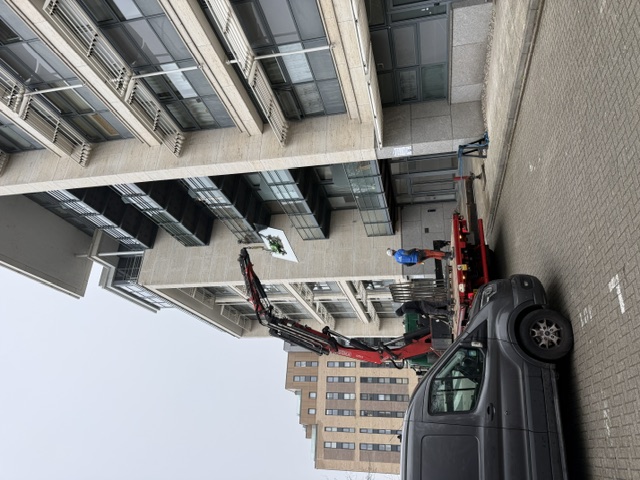
New framing is then positioned and anchored, with drainage, thermal breaks and allowance for future signage built in. Glass units are delivered to suit the programme, lifted mechanically, set on setting blocks and secured with pressure plates or structural silicone.
Doors, security hardware and sealants are fitted last, and the junctions with cladding, flooring and fascia are finished so the frontage looks complete and is ready to trade.
Post-Installation Checks Timeline
Once the glass is in, a short sequence of checks confirms the new shop front performs as designed and is safe to open. Within the first one to three days the installer should verify the fixings, check that sealants have cured, confirm alignment, and review finish colours and hardware against the specification.
Your contractor should:
- Confirm the glass types, edge clearances and load compliance match the drawings.
- Test door operation, access control and weather-tightness in real conditions.
- Inspect silicone lines, gaskets, drainage paths and protection from thermal stress.
- Hand over cleaning guidance, maintenance notes and an inspection schedule.
Those checks tie the design intent, the site work and the long-term life of the façade together.
Maintaining, Repairing and Replacing Shop Front Glazing
The shop front is both structure and shop window, so it needs a plan for upkeep, repair and eventual replacement. A quarterly inspection routine is enough for most units: check seals, fixings and the areas that get knocked, and write down any chips, scratches or movement.
Coatings, tints and etching earn their keep over time by limiting solar gain, adding privacy and stopping UV from fading displays and graphics. When edge damage, delamination or persistent misting appears, a targeted repair now is far cheaper than a structural problem later.
When the glazing reaches the end of its life, replace it with a higher-specification laminated or toughened system that builds in thermal performance, a security rating and room for future signage from the outset.
How to Choose a Shop Front Glazing Company in Valentines Park
Choosing a shop front glazing company in Valentines Park comes down to three tests: real local experience in busy retail settings and current regulations, a sound grasp of glass and safety specification that will satisfy British Standards and your insurer, and design and costing that fit your brand, your budget and the way the shop will be run. The next three sections take each in turn.
Assessing Local Experience
Telling a contractor who knows Valentines Park's retail streets from one who merely works nearby takes a few pointed questions. You want evidence rather than claims.
Ask how they have handled visibility and security for independent shops, galleries and units that host events or work with local makers. A firm with real local knowledge will talk about specific parades, footfall patterns and the quirks of the council's planning team.
Check their record for:
- Completed frontages around Cranbrook, Loxford and Ilford Lane.
- Examples of out-of-hours installations that kept shops trading.
- Working relationships with local planners, heritage officers and the Business Improvement District.
- Ongoing maintenance contracts with Valentines Park businesses, with records to show for it.
That is the profile of a contractor who designs around the commercial reality of Valentines Park rather than a generic brief.
Comparing Materials And Safety
Next, look at how each firm specifies glass, framing and safety, because the frontage has to sell the brand and protect it at once. Ask whether they propose laminated, toughened or a combination, and why. The answers should include measured impact resistance, certified attack resistance and compliance with BS 6262 and the relevant EN standards.
Press them on durability versus appearance. Aluminium, thermally broken steel and composite systems have different lifespans, maintenance needs and structural limits, so ask for wind-load calculations, edge-cover details and hardware test data in writing.
Finally, test their thinking on security: anti-bandit glazing, secure fixing methods and integration with access control and sensors, rather than a vague promise of toughened glass.
Evaluating Design And Cost
Having checked materials and safety, see whether each contractor's design and costing hold up commercially. Ask them to show options that balance daylight, branding and whole-life cost; the frontage is the link between passing trade and the till, not just a sheet of glass.
Ask how they reconcile modern colour schemes with heritage guidance in Valentines Park's conservation areas. A serious bidder will give an itemised quotation rather than lump-sum allowances.
Check that they:
- Put figures on the energy savings from the glass and frame specification
- Set out hardware, manifestation and installation sequencing in writing
- Show planning experience with conservation and heritage constraints
- Offer value-engineered alternatives that keep sightlines and brand colours intact
This service is delivered by our Valentines Park glaziers.
Frequently Asked Questions
How Does Shop Front Glazing Affect Business Insurance Premiums in Valentines Park?
It can bring them down. Insurers price a shop on its exposure to break-ins, injury claims and weather damage, and a frontage glazed with laminated, toughened and certified glass reduces all three. If the glass carries an EN 356 attack classification and the frame uses security-rated fixings, many underwriters will offer a discount or drop a requirement for external shutters. Keep the certificates and the installer's specification, and give them to your broker when the policy renews so the lower risk is reflected in the premium.
Can I Keep My Shop Open During Glazing Replacement or Major Repairs?
Usually only in part. While large panes are being removed and lifted in, the area in front of the glass is a construction zone with barriers, exclusion areas and lifting equipment, so customers cannot be there. Most Valentines Park retailers choose an early-morning, evening or Sunday slot, or a phased job where one bay is replaced at a time behind a temporary hoarding. The installer should provide a method statement and risk assessment, and you should tell your insurer the dates. Modular frame systems shorten the closure considerably.
Are There Eco-Friendly or Recycled Glazing Options Suitable for Valentines Park Shop Fronts?
Yes. Float glass is already made with a proportion of recycled cullet, and aluminium frames with a high recycled content are widely available with far lower embodied carbon than virgin metal. On the performance side, a low-E coating, warm-edge spacers, argon fill and a thermally broken frame cut the energy the shop uses every day, which is where most of a frontage's lifetime carbon sits. These choices support BREEAM-style targets without affecting clarity or branding, and the lower running costs tend to repay any premium quickly.
How Often Should Shop Front Glazing Be Professionally Inspected for Safety Issues?
Once a year as a minimum, and every six months for a busy shop or one with a heavily used door. Toughened glass is tough, but hairline fractures at fixings, failed unit seals and tired door hardware are easy to miss until they fail. A qualified glazing engineer will check the glass still meets current safety standards, test the fixings and closers, look at the sealant and drainage, and tell you if a newer laminated or security interlayer would reduce your risk. A written report also helps with insurance and landlord obligations.
What Are Common Mistakes Businesses Make When First Specifying Shop Front Glazing?
The usual errors are putting looks ahead of impact resistance, under-estimating how hard the glass will be used, and ignoring how long the materials need to last. Thermal modelling gets skipped, so the shop overheats in summer; the weight of large panes and heavy doors is misjudged; and edge clearances for thermal movement are left too tight. Acoustic needs and security laminates are forgotten, and the glass is chosen before the frame system. Write a performance-based specification, ask for test evidence, and bring a glazing engineer in at concept stage.
Summary
The right shop front glazing in Valentines Park improves security, energy efficiency and brand presence in a single piece of work. Choose the glass for the job, a frame that suits the street, proven security hardware and a professional installer, and both the risk and the lifetime cost come down. Keep it maintained and it will look sharp for years. Call us for a free survey and quotation for your Valentines Park premises.